


Step 1
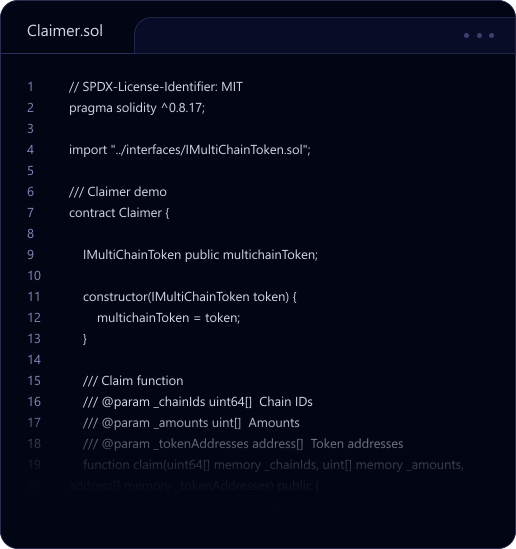
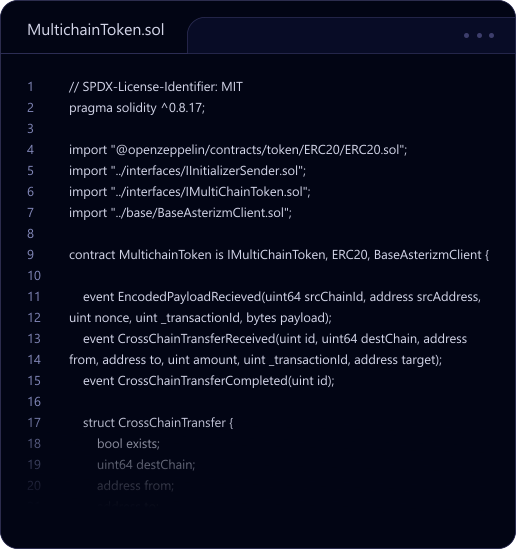
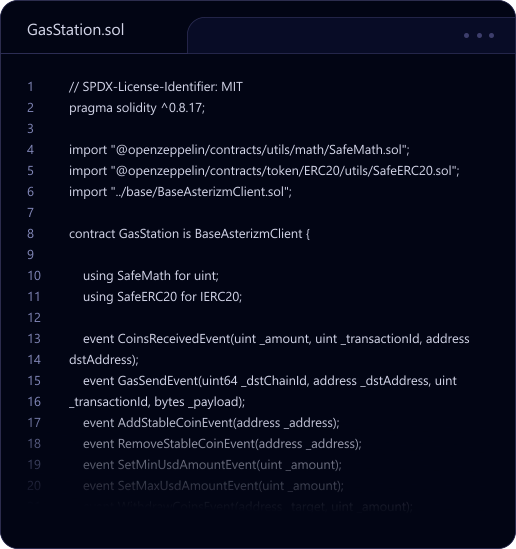
The client implements a smart contract using
an abstract class from Asterizm and deploys
it to the required networks.
The _initAsterizmTransferEvent() method
is used to initiate a cross-chain transaction
on the contract. The data and parameters of the
cross-chain transaction are transmitted to it.
The transaction can contain arbitrary information and one
or multiple actions (instructions)
to be performed on the destination
networks.
Step 2
The client smart contract sends the received data and
hash based on the payload generated at that
moment xID, source chain id, destination chain id, client smart
contract address in the source and destination chains.
Note: At this step, the key parameters are formed,
which will further ensure the security of the cross-chain
transaction, namely to confirm its validity and integrity in
the destination chain.
Step 3
The Client off-chain module receives the cross-chain
transaction payload and calls
initAsterizmTransfer() on the client’s smart
contract in the source network to continue the cross-chain
transaction.
Step 4
Before sending transaction proofs (hash and
xID) to the Initializer contract, the Сlient’s smart contract
performs a validity and integrity check of the transaction
by comparing the hash, which is calculated based on the payload.
Note: This effectively mitigates the risk of spam
and counterfeit transactions in the event of a compromise of
the Client server.
Step 5
The Initializer smart contract verifies the transaction
nonce to maintain the sequence of cross-chain transaction
execution and sends the transaction proofs (hash
and xID) along with unique parameters to the Translator smart
contract.
Note: When a data packet is received on the
Initializer smart contract, the client is identified based
on the destination chain id, the Client smart contract
address in the destination chain, and the client smart
contract address in the source chain. After the client
(sender) of the cross-chain transaction is determined, the
nonce value is incremented for it.
Step 6
Asterizm Relayer servers pull the proofs with the
parameters from the Translator contract and send them to the
Translator smart contract in the destination network for
further processing.
Step 7
The Translator smart contract on the destination network
receives the encrypted data along with the parameters from
the Relayers and then transfers it to the Initializer smart
contract for validation.
Step 8
Upon receipt of the proofs and parameters, the Initializer
smart contract verifies the nonce to maintain the
transaction sequence, records the transaction xID for
validation at step 10, and sends the proofs to the Client's
smart contract.
Step 9
The client's smart contract in the destination network
receives the proofs along with the parameters and emits an
event to notify the delivery of proofs, which is anticipated
by the Client's off-chain module.
Note: At this stage, the first but not the main step
of transaction validity check occurs — the
hash from the payload and the
transaction's xID are compared, mitigating the
risk of relay server compromise.
Step 10
After the first step of cross-chain transaction validation,
the client’s server initiates the transaction on the
Client’s smart contract by calling the
asterizmClReceive() method in the destination
network, sending the payload (data) and
xID to the contract, and validating the
transaction on the Initializer smart contract by calculating
the hash from received payload and checking
the xID.
Note: At this step, the integrity of the data and the
trusted addresses is checked before the transaction is
executed. This check eliminates the risk of hacking the
client’s server.
Deep tech: The verification is performed by
calculating and matching the
hash
from the payload with the
hash received from Relayers and the
xID that was previously stored on the
Initializer contract. If the verification succeeds, it means
that the client’s contract executes exactly the transaction
it sent, and does so for the first time. This algorithm
eliminates the possibility of spamming transactions and
spoofing data on the client’s server (if, for example, the
server is compromised).
Step 11
Once confirmation of the cross-chain transaction's validity
and integrity is received, the client's smart contract
proceeds to execute the payload that was included in the
cross-chain transaction, calling methods of other contracts
or performing calculations on the client’s contract. The
logic of this step depends entirely on the client's business
logic, which is implemented as part of the cross-chain
transaction.